Book the tickets
Booking hours:
9.00am-13.00pm
Monday- Friday
Reservations are accepted up to 3 months in advance of your arrival date
+48 33 823 35 65
+48 33 823 26 62
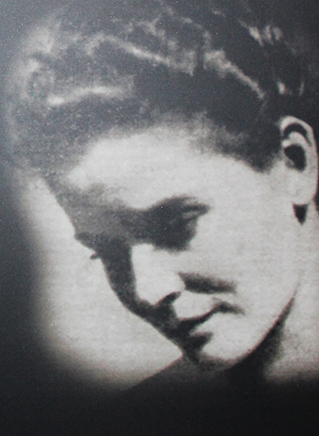
The eminent actress, director, professor and rector of the Academy of Dramatic Arts in Krakow, the Honorary Citizen of Krakow, Karol Wojtyla’s friend from the time of his involvement in a theatrical activity in 1940-1943, Danuta Michałowska (1922-2015) died on January 11, 2015.
As a young secondary school student, she saw him for the first time on 15 October 1938, during an evening of poetry: „Drogą topolowy most” (A poplar bridge on the way) on the stage of the Catholic House Blue Hall (now, this is the building of the Philharmonic in Krakow), where Wojtyła as a student of Polish philology at the Jagiellonian University was reciting his youthful poems.
Invited by Juliusz Kydryński, she met Karol for the first time in the Kydryński family apartment located in 10 Felicjanek street in Cracow, in August 1940, where, inspired by Juliusz Osterwa, they started working on the Stefan Żeromski’s drama „Uciekła mi przepióreczka” (The Little Quail Ran Away From Me).
In three, they made a performance of the second act of this drama for thirty people in wartime clandestine conditions. In the following months, in the apartment of the Michalowski family, in Dunin Wąsowicza street (currently, 36 Smolensk street),
Karol with the same people and with Tadeusz Kwiatkowski were working on the Cyprian Kamil Norwid’s drama „Noc tysiączna druga” (the thousand-and-second night), but this time, the performance did not occur.
At the beginning of 1941, again in the apartment of Kydryński family, they were preparing the scenes from „Wesele” (The Wedding), the drama by Wyspiański. By June of that year, this time in the Tadeusz Kudliński’s apartment, they were working on Wyspiański’s drama „Wyzwolenie” (Liberation) and „Fajka Kopernika”(Copernicus’pipe) by Juliusz Kydryński. However, due to the continuous arrests, the premiere of these performances never occurs.
In August 1941, Karol Wojtyla invited Danuta to the Theater of the Word founding meeting, which he organized jointly with Mieczyslaw Kotlarczyk who came from Wadowice.
In this underground theater, called later the Rhapsodic Theatre, under the direction of Mieczyslaw Kotlarczyk until 1943, they appeared in six of the seven plays prepared and staged by this theater: „Król-Duch” (King-Spirit), „Beniowski” and „Samuel Zborowski” by Juliusz Słowacki, „Hymny” (Hymns) by Jan Kasprowicz, „Portret artysty” (Portrait of the Artist) by Cyprian Kamil Norwid, „Pan Tadeusz” (Sir Thaddeus) by Adam Mickiewicz.
In total, they appeared together in several performances preceded by almost a hundred rehearsals. After the war, Danuta Michałowska became a professional actress and performed in Rhapsodic Theatre until 1961, when she founded her own One Actor Theatre, after renamed Teatr Godziny Słowa (Hour of Word Theatre).
Karol Wojtyła as a priest, bishop and cardinal, through all the years, was interested in the activities of the Theater, which he co-founded. He attended the premieres, participated in substantive discussions and important events (e.g. in 1950, the symbolic ceremony of laying the can with documents of Rhapsodic Theatre into the foundations of the rotary stage axis of the theater built in 21 Starowiślna street), he blessed actors’ weddings, baptized their children, wrote articles, helped in the years when the theater ceased its activity (1953-1957), consulted his dramatic works with T. Kotlarczyk, for example „Przed sklepem jubilera” (The Jeweler’s Shop).
In 1967 he intervened at the Minister of Culture, unfortunately unsuccessfully, against the definitive closure of the Rhapsodic Theatre by the totalitarian authorities.
Danuta Michałowska was buried on January 16 this year in the cemetery of the Holy Saviour Parish in Krakow, where Mieczyslaw Kotlarczyk, a friend of Karol Wojtyla, the creator and founder of the Rhapsodic Theatre has also been buried.
Michał Jakubczyk
